Building that 1-Click magic in your Product

Many startups struggle when it comes to building features for their product. Their product road-maps are a list of features they plan to include over next 6-9 months; once they are built out – its a feature mess ~ too many things to do that leaves the user confused.

This does not stop here., entrepreneurs always have this gut feeling – the next feature will be ‘the one’ that will make it up for us. End result is the product becomes feature-heavy or too complex to use.

On my last post – 15 Steps towards building a Great Product, I posted about a simplified approach towards building products; this post is about adding a little magic with just 1-Click.

Here are some examples of 1-Click features:

  • Amazon: 1-Click Checkout (Transaction)
  • AngelList: 1-Click Apply to Accelerators (Application)
  • AngelList: 1-Click Introduction for hiring talent (Hiring)
  • Facebook: 1-Click Sign-in for 3rd Party Apps (Registration)
  • Foursquare: 1-Click Check-in (Location)
  • LinkedIn: 1-Click Endorsement (Interaction)
  • LinkedIn: 1-Click Apply (Hiring)
  • Quora: 1-Click Upvote (Endorsement)
  • Twitter: 1-Click on # for Topics & Trends (Buzz)
  • Uber: 1-Click to Book-a-Cab (Location)

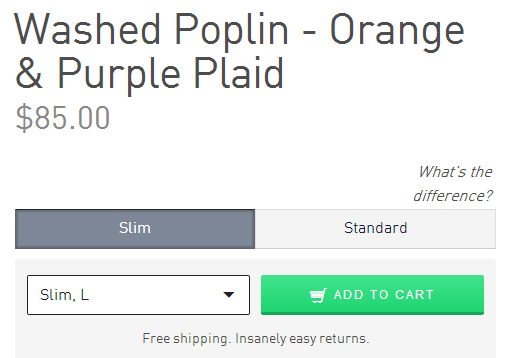
The equation is simple here – what is the core data the product has about the end user and figure out the 1-click feature that best suits your product use-case.

Example.,

  • Amazon stores user data & credit card information which enables it to do single click checkout. 
  • AngelList has a startup profile that it connects with investors / accelerators / talent. 
  • Facebook has user information & social graph through which it allows users to signup for 3rd party apps. 
  • LinkedIn has professional profile of the user through which it allows users to apply for jobs. 
  • Foursquare has user’s location that is used to check-in at a venue.
  • Quora has user’s credentials that are used to upvote (or endorse) a particular answer.
  • Uber has user’s location that is used to book a cab.

Similarly there are opportunities for 1-click on-site distribution. Share on Facebook, Retweet on Twitter, Re-pin on Pinterest or Re-blog on Tumblr are some superb examples of on-site distribution achieved by a single click! 

Concluding Notes:
Many startups choose to ignore simple means to add a magical experience to their products. Focus on building too many features makes the product a bit complicated and difficult to use. 

Remember – most startup products / features are just connecting two dots. Do that with a single click and make it feel like magic!


15 Steps towards Building a Great Product!

Note: I recently gave a talk at The Startup Leadership Program and shared thoughts on Product Management and how to go about building great technology products. The deck I shared is embedded w/t the post.

This for all founders & product geeks (that includes me too) who want to build the next great product. Sharing all this for #StartupKarma (Heard this from Bowei – ‘Continue to give away and help other entrepreneurs with a hope that it comes back to you someday!’) 

.


The Background:
As a startup founder, one gets bombarded with advice on pitching, raising investments, growth hacking, marketing and so on. It comes to us through one-on-one interactions, posts we read or multiple startup events and meetups. Unfortunately there is very little or no advice that actually helps you build your product.

Over months, I have studied product patterns in several successful products (like Facebook, Twitter, Quora and so on). This has made me believe that building great products is not just about picking random ideas and shooting in the dark, its a art and science both put together.

Here is a step by step guide for building a great product. I have taken Twitter in this case to demonstrate the examples, however you will be surprised to see the similarities with other products.

Note: Don’t proceed without understanding #0; and without finishing #1 & #2.


#0 | Think: Product does Marketing
The thumb rule for any great product is that you don’t need to market it; it requires zero marketing spends. Instead, it is the users who spread the word, acquire more users which leads to high growth. High virality and strong engagement are the two striking characteristics of a great product. 

So here is the step by step guide towards building the next great product!

</end 0>

#1 | Think: What product are you building?
Have clarity about the product you are building. Make your product statement!

Here are the rules:

  1. Define your product in < 10 words. This is not your pitch statement, its your “product statement”.
  2. Be grammatically correct, include name of your product in these 10 words.
  3. No references with other startups / products. This cannot be “AirBnB for Cars” or “Facebook for Companies”.

Share this product statement with others. Does it communicate ‘everything’ your startup is going to build? If it does not, work on this again!

</end 1>

#2 | Think: Vision
Most startups have beginnings over a random idea (usually this sounds like a billion dollar idea then). Once those ideas get built in 3-6 months, the founders are lost and clueless on what next!

Have a vision around this product you are building. You can run out of ideas, but you can’t run out of vision. Build a product roadmap around this vision. (I mentioned it last year too – point 5 )

Make a note of the vision for your startup / company. Check if the product statement you wrote in Step 1 is the right to achieve the vision you just stated.

Now lets start with building!

</end 2>

#3 | Think: Atomic Unit of Product
I picked this up from Fred Wilson’s post which got me thinking for days on my our own product and even inspired me to rethink on our product / vision.

What is the atomic unit of your product? Example; Atomic unit of Twitter is a ‘Tweet’. For Facebook it is a status update. For Instagram it is a photo. For Gmail it is a email. For YouTube  it is a video.

Simple rules about Atomic Unit of your product:

  1. It has to be owned by you.
  2. It should be only one. More than one atomic unit? Signs of trouble!
  3. Your product statement and vision should be centered around this atomic unit.

</end 3>

#4 | Think: Features

Were always confused on figuring out which features to build and which to let go? Answer is simple – build features only around the atomic unit of your product.

Example., Twitter’s core features – reply, retweet, favorite & follow (a user who tweets) are build around its core atomic unit – “tweet”.

Rules to remember:

  1.  List down all features you can think / build around the atomic unit of your product!
  2. Strip down all the features you have on your product that are not centered around this atomic unit.
</end 4>


#5 | Think: Engagement
Want your users / customers to engage with your product – ensure that features you have selected to build around the atomic unit lead drive engagement.

Example., In case of Twitter, the engagement is Retweets, Favorites and Conversations that one can have around the atomic unit ‘tweet’. Similarly for Facebook it is – Likes, Comments, Shares and so on.

Don’t getting fascinated by engagement features around popular products and force-fit them on your product. Example., force-fitting the favorites like functionality from Twitter on your product.

Rules to remember:

  1. Drive engagement around the atomic unit of the product.
  2. Be innovate. Try multiple options to figure out the perfect fit around your product.
  3. Engagement should be measurable! (Example., 35 Retweets)
</end 5>

#6 | Think: Flexibility

Most startup founders I meet are not flexible. They don’t want to change their product and want users to follow a certain flow which they believe which is right. When asked why, most of the times the answer is “we don’t want to let user play around the product”.

Think twice. Your product should be flexible and your users ‘must play’ with your product. Your product should be flexible at its core – at its atomic unit! Example., Twitter lets you tweet text, a photo, video, post, location & in multiple languages. Others., Facebook lets your post a status that is a text, photo, video and so on. Same for Quora, Tumblr and the rest.

Rules to Remember:

  1. Give freedom to your user to play with your product.
  2. List down all formats in which a user can express the atomic unit of your product.

</end 6>

#7 | Think: Distribution

Key to success of any platform – distribution. Why does this come so late? – You need to build your product right before you even think distribution.

Most founders think distribution is ‘sharing on other platforms’. It is not! Before you even get to allow users to share & distribute to other platforms like Facebook or Twitter, get users to distribute on your own product.

Example., Retweet on Twitter, Share on Facebook, Upvote on Quora, etc are the best examples of on-site distribution.

Rules to Remember:

  1. Distribution should be centered around the ‘atomic unit’ of your product.
  2. If a user has not distributed anything on your product, very rarely would be distribute something outside of it.
  3. Don’t force-fit social in your product. Users will figure out way to share if they like something!
</end 7>


#8 | Think: Endorsements
Don’t we breath and live endorsements in our every day lives? Why do we forget to build that in the products we create. Great products use endorsements in every element – it brings out relevance & context to information.

Example., If you notice every element of Twitter has a endorsement if you are logged in. This includes – Retweeted by, Follow Suggestions, Profile Views and Search Results.

Rules to Remember:

  1. Endorsements work 100% of the time. Build them in your product.
  2. Anything that is not context is spam. (Said this earlier)
</end 8>
 

#9 | Think: User Psychology
Most entrepreneurs want users to love their product. Truth is, users don’t love your product. They love the content (or data) on it!

Example., We love to express ourselves on Twitter. Discover best answers on Quora. See moments shared by friends on Facebook.

So if you are building a product, remember to allow users to create their own content and discover relevant content. Don’t try to get users forcefully share something to Facebook or Twitter, it will not work.

Rules to Remember:

  1. Content should be expressed in the atomic unit of your product. Nothing else.
  2. Creation of content is much more valuable than sharing of content. 
  3. If a user has created some content on your product, has something he owns – he is engaged.
</end 9>


#10 | Think: Content Dynamics
Once you let users create content on your site, ensure you understand the content dynamics – most importantly that user’s need for that content to be seen! This is step 2 of user psychology – he needs activity around it that will keep him engaged through the features you have built around the atomic unit.

Example., If I tweet something on Twitter, who consumes that content? Not all of my 1000+ followers on Twitter, many of them may never notice it. But there are few followers who will retweet that and amplify the tweet.

You need to have features (again around the atomic unit of the product) that amplifies / distributes the content. And users who do these are your content curators! That is all one needs to know about content dynamics! 

Rules to Remember:

  1. Great content is created by just 1% of your users; That is amplified by 10% content curators – their actions make things go viral!
  2. When content from your product goes viral, in in true sense your product goes viral.
</end 10>
.
#11 | Think: One Point of Discovery

Building product with above elements is important, and now crucial is to package that all in to a exemplary product design. The thumb rule here is simple – user should be able to do everything that has been mentioned here (till now) on one screen. 

Example., the logged in interface of Twitter, Facebook or Quora (though imo Quora still needs some improvements).  

Rules to Remember:

  1. Don’t build a product around design. Build design around the product.
  2. Minimize page views, clicks. User should be able to complete 75% tasks / actions of your product from the screen he is displayed where he logs in.
</end 11>


#12 | Think: Privacy
This point is intentionally left blank. That is all I have to say about privacy!

</end 12>

#13 | Think: MVP
Stop building minimum viable products, users won’t adopt them. Instead build more valuable products, I wrote a full post on this topic - the minimum viable product trap!

Still not convinced, here are some examples - 

  1. Bing is a good search engine (if you have not tried it lately, you should). Still we continue to user Google regularly and did not shift. Why? Because there is nothing more valuable it has compared to Google.
  2. Outlook, is now probably as fast as Gmail and with most (of the commonly used) features that users would expect. Yet Gmail continues to lead because Outlook provides nothing more valuable than Gmail.
  3. We did not move from Dropbox to Google Drive. Same., not more valuable.
  4. While in case of WhatsApp, we all moved not just from text messaging to WhatsApp, but also dumped Facebook Chat, GTalk and many other products. Why? – because it is more valuable!

Rules to Remember:

  1. Build something of value to users, that will drive adoption of your product.
  2. Build your product for real users, not for early adopters.
</end 13>


#14 | Think: Growth
If building the right product is the toughest thing to do for a startup, distributing it right is even more tougher. If your distribution plan includes advertising or spending $$$s – then you need to rethink your strategy. 

As a startup, you need to completely rely on any existing network to bootstrap your initial growth. Even the existing successful products have, some examples -

  1. Twitter: Live tweets at SXSWi conference displayed on large TV screens.
  2. Facebook: Opened initially in Harward, and more schools later.
  3. YouTube: Nike Advt went viral. Plus many users embedded YouTube videos on then popular MySpace.
  4. Gmail: It was a mail service from Google. Invitation Only. Anyone searching for email services on Google.com was shown advts for Gmail.
  5. Quora: Initially opened to Facebook Alumni network
  6. Zynga: Facebook Feeds.
  7. Dropbox: Invites by Email + Connect Facebook & Twitter accounts.

Rules to Remember:

  1. Bootstrap your growth on other existing successful & large networks.
  2. The networks could be online or offline. Focus on only one!
</end 14>

#15 | Think: Shipping Fast
Many entrepreneurs / founders keep delaying their public beta as they wait endlessly to build a perfect product. This can be very frustrating since the perfect product is always 2 or 3 more features away. Some of the common reasons I hear is – “What if early adopters don’t like the current version of product? what if they rant about it on Twitter?” 

Founders should also know that early adopters are very considerate – they know this is the first version of product that is being shipped. In my case, I rarely rant about early stage startups. To communicate something or to share feedback I shoot a email to the founders. In case I really like a product I spread the word for it. Yes, but I do rant if a startup has raised a Series A, in this case I assume you should have a product where silly mistakes are not acceptable :P

Rules to Remember:

  1. Ship a Imperfect Product. Its OK!
  2. Collect feedback and ship changes fast. Ensure your write to your users and update them when feedback is implemented.
</end 15>


Concluding Notes:
Building products is not easy! Most of the time its shooting in the dark with no clear modelling that lets the product manager believe if a feature you are building will work or not. As startups, we are pressed on time and a wrong feature can cost us time & money.

It took me quite some time to study and understand these unique patterns in several successful products which includes Facebook, Twitter, Tumblr, Quora and others; finally had a chance to put that on a deck and now on this post. 

While this product management process has been personally very helpful for us at Wishberg; I plan to update this over time as I learn, understand and implement more. Would also want to hear your thoughts on this, please write to me on pj @ beingpractical.com on your learnings and inputs. 

Thank You!


Before you start with Growth Hacking

Note: This post is extension to my recent tweet on Product Management.

Building a product startup is exciting. Most startups look to raise capital early and investors look no other measure but traction to take their bets. This need for traction puts immense pressure on the founding team to grow their startup. That leads to implementing multiple tips and tricks to improve the key product metrics – most importantly to show traction to investors. Founders get into the so called ‘growth hacking’ mode. 

Growth hacking is the new buzzword in the startup town. There is nothing wrong with ‘hacking growth’ – most of the tricks attempted in this phase end up being short-term techniques. They might work for a while, bring traction for a while (which might lead you to raise investments) but these techniques don’t help in long term and the growth is not sustainable and quickly falls off.

Startups tend to neglect the simplest rules of product management before starting with growth hacking. According to me, here are the 5 Basic Rules of Product Management:

  1. User Engagement > Growth Hacking
  2. Retention > Acquisition
  3. Context > Activity
  4. Own growth channels > External channels
  5. Being Valuable > Being Social
A. User Engagement > Growth Hacking
Remember startups like BranchOut, Glassdoor, Viddy, Socialcam – that famously hacked growth through Facebook Dialog Feeds? Though they showed amazing growth curve initially, it soon fell off. Most users dropped off the product as quickly as they signed up never to return again. Reason – zero engagement on the product. Ensure that there are enough engagement loops on the product before you do any sort of ‘growth hacking’.

B. Retention > Acquisition
Acquiring users is the simplest thing to do, retaining them is the key. Any user acquisition technique should retain a good percentage of acquired users. Not just that., over a period of time the users who dropped off should be reactivated – there should be enough methods to pull them back – emailers / network effects / and so on. If the product has strong engagement features, retention is a easy task.

C. Context > Activity
Most products undermine the importance of context. In today’s world – anything that is not context is considered spam. The finest examples of a context driven product is Quora that lets you follow topics of your interest and helps you discover relevant content. Also important are products like Twitter (that lets you follow users) and Pinterest (that lets you follow boards) to build a information stream in context thats relevant to you. Think of context when you build features.

D. Own Channels > External Channels
Many startups focus on external channels for growth. Branchout was focussed on Facebook Dialog Feeds, Zynga was focused on Facebook Activity Wall, Viddy was focussed on Facebook Open Graph. Perfectly fine – if there are enough engagement loops and good retention strategy. However depending on external channels might not be sustainable – many startups hacked the Facebook Open Graph to get significant users – this led to users complaining about to the noise on Facebook wall, Facebook in return built many approvals / controls to prevent applications from spamming the users and giving users ease to block spam applications.


Large startups like Facebook, Dropbox, WhatsApp were completely focussed on driving growth through channels owned by self and had very little or no external dependence for growth. Don’t depend too much on external platforms like Facebook, Twitter, Google (SEO) for growth – build our own channels. Facebook’s journey of growth hacking is well
documented. Also Dropbox as mentioned in next point. 

E. Being Valuable > Being Social
There are also startups that focus on building ‘too-many’ social sharing features, expecting users to share almost everything and anything on to their social profiles (Facebook, Twitter, etc). Users are smart – they don’t fall in this trap and founders keep wondering why no social sharing happens. Instead of trying to be forceful on social, focus on being valuable. 

Example –  Dropbox, it was a very valuable product that had super methods to hack growth – by connecting FB or Twitter account with Dropbox and providing users additional storage space by asking them to spread a message to their social circle or invite email contacts.

Concluding Notes:
Can you hack growth first and implement these rules later? No. There are startups that hacked user acquisition and raised initial investment on traction., and later things did not go according to the plan. Not just startups, that leaves even investors wondering what went wrong after the initial impressive growth metrics. 

Startups are about growth, no doubt. Getting Techcrunche’d (PR release), top position on Hacker News or Video that goes viral might bring one-time traffic boost / user sign-ups. You can get good amount of traffic by integrating with Facebook Open Graph, optimizing site for Google (SEO) or even paid user acquisition – but make sure that the product has enough engagement, retention loops, value and context to sustain the users you are acquiring!

You may hack growth., but you can’t hack success. Building the next billion dollar company is a big deal!

The Minimum Viable Product (MVP) trap!

Before your read this post, I suggest you go over to Hacker Street India and glance through this thread – How much time it took for the first version (MVP) of your product!

If you don’t know much about MVP, glimpse quickly through the Wikipedia post on – Minimum Viable Product. The definition: “The minimum viable product is that version of a new product which allows a team to collect the maximum amount of validated learning about customers with the least effort.”

There is much ambiguity in this definition. Lot of judgement is required by the startup founders to define what exactly is MVP version for their product since there are no bullet points to clearly define that. That exactly is a MVP trap!

If you were to build a Social Networking site today, the benchmark for minimum viable product is Facebook. A user will expect all existing features of Facebook to be in your product! For a email service the benchmark is Gmail. For a mobile phone messaging app it is WhatsApp. For a social QnA product it is Quora. For a crowd-funding platform it is Kickstarter. For a phone operating system it is Android / iOS. For search it is Google. For a tablet device it is the Apple iPad.

Early adopters loved the first version of Gmail because it was so much better (and fast) than existing products – Yahoo / Hotmail. They loved the first version of iPhone because it was much better (and usable) than Nokia or Blackberry or Palm then available. On other hand, Bing did not see a great adoption because it was another search engine with no compelling reason for users to switch from Google. Similarly, early adopters saw Microsoft Windows Phone as a different OS for mobile which did all that a Android / iOS phone did differently (different but not better).

If the idea of MVP is showing the product to early adopters and collecting quick feedback, most of that consumer feedback will be based on their comparisons with other products they use on an ongoing basis. To create a wow factor and a compelling reason for users to switch to your product, the minimum viable product you roll out should basically not just exceed current market standards but should also be much better than current offerings.

Otherwise MVP is a trap. Getting a so called minimum viable product (defined by yourself) out in 30 days makes no sense. Every product is different. No product was successful cause its minimum viable product was out in 30 days. You can boast about how quickly you rolled it out, collect feedback from users / customers (most of this feedback is predictable and chances are you would already know about it) and keep building features. Define MVP as not something you can roll out fast, but something that is more valuable than existing product. MVP should not mean Minimum Viable Product. MVP = More Valuable product! (suggested by Nischal)

This is also true for service companies. If you are building a ecommerce company today in India, customers would expect not just similar online transaction experience but also the same level of reliability in logistics or customer support as provided by Flipkart or HomeShop18..

Is there a way out of this? Yes – build really innovating products that don’t have existing benchmarks so you can define one yourself and for others to follow. Or build products in a domain were market leaders are yet to be established.

To succeed, you have to build a better product than one available in the market or innovate and build something that does not exists already! Post that stage you can – Build. Ship. Market. Learn. Build. Let the cycle go on.

Remember, the bar for Minimum Viable Product / Service is very high!

img credit: waltimo on flickr

#FoundersMeet 3 – Collective learning of 20 Early Stage Startups

Background – I was fortunate to be invited for the #FoundersMeet 2; informal get-together of 7 startup founders last year. This time around Anirudh, Sid, Nischal, Deven and I suggested to move it beyond our circle and extend it to 20 startups to come together and share our small success stories, failures and challenges. We also wanted to create a strong connect for ‘Mumbai-Pune Start-up Ecosystem’ which sort of never existed.

The 3rd #FoundersMeet happened in Mumbai on Wednesday 23rd Jan 2013 (a working day)., was expected to go on for about 7 hours, the interaction continued for 13.5 hours (yes!) with some amazing insights discussed and shared. I’m sharing this post on behalf of all the startups (& their founders) who participated.

Selling a SaaS Product:

  • International Customers are more inclined towards using self-service products. Indian counterparts expect hand holding and need assurance of customer service at arm’s length even when not required. 
  • Customers in India will insist even on customizing a standard SaaS product. This tends to be service-model trap, best avoided. 
  • As long as the user-proposition communicated during sales pitch or on the product is fulfilled, International customers are satisfied. They will switch the product fast if they find another product delivering more value. On other hand, Indian customers take time to switch product if a good relationship is established. 
  • If a competitor is offering a product for free, users will not like to pay you for that product.
  • Sell the product to the poster-boys of the industry, rest will follow by themselves. 

Product Pricing:

  • There is a disproportionate value in the word ‘Free’. Use it whenever you can. 
  • Over 90% of users will sign-up on the Free plan. When they move to the premium plan, they are most likely to use the plan that has the lowest value. Ensure that this low value plan has a disproportionate value for its price. That makes customers love you instantly.
  • When someone is making money because of your product, make sure you are making money out of it too.
  • Positioning your product / business is important. It can either be in Income side or Expense side. Always pitch / present your product on income side – “we help you generate money / your earnings will increase / your savings will multiply.”

Up-selling Product:

  • Acquire with freemium plans. Ensure enough hooks are in place that leads the customer to purchase the product post the free period or upgrade to the next paid plan.

Identifying Product Drivers:

  • A SaaS based product will not be driven by technical people, its driven by functional people. Build a product that can be installed by techies in less than 5 minutes, and can be driven by functional people without interference of tech people.
  • Sell the product to decision makers. Never pitch any product to a tech person. The tech person will always think that he can build it by himself.

User Acquisition Hacks:

  • For B2C products: Sell traction of existing users to new users. Create a feel that – Yes, there are people here, you’re not alone. That gives new users confidence about the product.
    Example – In Mumbai when you see 3 Vadapav stalls on a street, unknowingly you will go towards one that has maximum people eating and buy from there. 
  • For B2C products: Show activity. Existing activities drive more activities.
    Example – IRCTC, startup folks and early adopters think the platform sucks and fails whiles booking; common people think of IRCTC to be a big corporation that there is always high demand. That leads to perception of credibility for IRCTC.
  • Use Associations for Endorsements - IRCTC mentions – ‘A Government of India Enterprise’. This is a big endorsement for IRCTC and brings credibility to it.
  • Bounce Rate Reduction – A transactional consumer site was featured in leading newspapers. When they mentioned ‘As seen on Newspaper A, B and C’ on their homepage – it boosted its credibility and reduced the bounce rate.
  • Social Proof for User Acquisition - The Facebook widget that displays people who have liked the brand also builds credibility.
  • Real People - A SaaS based startup focusing on product for Chartered Accountant features a local/prominent CA on its homepage. That quickly build credibility for itself in eyes other CAs. It was easy to acquire more customers.
  • Investor Hack - For SaaS startups, whenever any VC reaches out to you, get them to introduce to its portfolio companies. Its quickest way to demonstrate more traction and more importantly to add new customers.
  • Physical World - Example., Printed Coupons redeemed at Restaurants are social proofs in real world. Makes other users curious on how did a customer get discount / where did he get the redemption coupon from. 

Ecommerce:

  • Thoughts on heavy discounting in current Ecommerce business in India, its like ‘Selling a Rs.100 note for Rs. 90′.
  • Potential in disrupting offline business is huge. All online businesses are not even 1% of the offline businesses.
  • Offline products are indeed cheaper than online. Consumers researching online and transacting offline is big. This market is ripe for disruption.
  • Ecommerce players are now less focused on doing marketing campaigns, but more focused on increasing conversion ratios of existing traffic.

User Experience:

  • UI is ‘relative’. Focus on User Experience.
  • Cleartrip is loved by all of us; but its clearly MakeMyTrip / Yatra that works with masses.
  • Make the product work 100% of time for what you promise.

Entrepreneurship:

  • Don’t fall in love with your product. Fall in love with being successful.
  • Things that work in west don’t work in India. Specially with funding and investments. Currency for investment in India is not traction, its revenue.
  • Be a salesman. Never miss a opportunity to make noise about your product.
  • Don’t focus on a niche market, there are very high chances of failure. Instead focus on a large market opportunity, its more likely to find success here.
  • Notice early signs if things are not going your way. Pivot fast.

Product Distribution:

  • SaaS products: Explore opportunities to integrate with large platform players – Domain Cpanels, or ecosystem creators like Shopify, BigCommerce, etc.
  • SaaS products: Label your widgets – ‘Powered by You’. They are most valuable for Inbound leads.

Product Scaling:

  • Don’t just design products for scale / growth; also ensure you design the business model for scale.

Essential Traits of Consumer Product:

  • Curiosity. Rely on Curiosity – (Example LinkedIn – 2 people have seen your profile today).
  • Build the – Theory of Reciprocation into your product.
  • Gamify some features, let users do free marketing for you before unlocking information. (Example – Tweet about something to show details).
  • Understand show-off value in your product. People love to show off on Twitter & Facebook. Capture such points to your product.

Social Media Marketing:

  • Twitter links have a CTR of 0.5% to 0.8%. Customer acquisition here happens in scale. Spend energy wisely.
  • Don’t spend time on talking to random folks on Twitter based on their conversations. Extremely time consuming and most unlikely to convert.
  • Facebook advertising does not lead to conversion. Its best suited for brand building.
  • Facebook Contests that involve sharing real pictures of users online brings lot of credibility to brand.

Competition:

  • Once a user has signed up for the product; make sure it works it. Don’t bother about competition. He has taken pain to signup to your product, make the promise work.
  • You’re the only one who know about your competitors; not your customers.
  • Many SaaS verticals are getting crowded to an extent that price remains only factor to decide. Only the ones that are able to innovate will survive.

Visibility:

  • Founders should be visible on Social Media. Talk about the product and should be able to convince their followers about their passion. Only passion attracts initial traction.

Market Penetration:

  • If you are doing something innovative (either B2C or B2B) – you will need to spend good amount of time on educating your users / customers. Its easy to get frustrated in this loop.

Content Focus:

  • Don’t get carried away by ‘Content Marketing’ or ‘Content Sharing’.
  • Building products that have content plays is difficult – content creators are few and content sharers are in plenty (Usually 1% to 99%)
  • Look for plays that involves sharing of content already created.

Building Relationships:

  • B2B: Build great relationships with your marquee customers. Keep them educated on new initiatives, new market dynamics and help them monetize better.
  • B2C: Continuously stay connected with your early adopters and take feedback from them. Keep them informed of new updates, they’ll love you. Whenever any suggestion is considered, incorporated into the product – communicate to users.

Driving Engagement:

  • Build features that would enable discovery of relevant / contextual information – that leads to higher engagement on the product.
  • Keep users involved… the trick is dashboard views. They create the “I’m in control” feeling for users.

Search Engine Optimization:

  • Figure out what you are optimizing for & the competition on that. Example., if you are trying to optimize now for ‘Apple iPhone’ – you would be the millionth website trying to do that. Get your own niche, it works best.

Mobile Apps:

  • Discovery of mobile apps is biggest challenge for them. Notice that many apps are trying a generic name for better discovery while users are searching for any other app.
  • Integrate app with key functions of phone. For example, on Android – phone book integration, and so on.
  • There are many hurdles in mobile app development cycle, best to understand from multiple startups who have built mobile apps earlier.
  • App Ratings matters, a big consideration factor for user to download the app. Get the initial ratings by distributing the app between family & friends.

PR:

  • A press release in India goes not get you much traffic. Its great channel for visibility, but don’t depend too much on this channel.
  • International Blogs & Coverage had a higher conversion ratio for products. International users give a try to product, sign-up, explore and use it.

Mobile Advertising:

  • Despite all the hype, Mobile Advertising is still considered as experimental budget.
  • Mobile Industry – one cannot be stuck in a region or one product for more than 18 months. Fast innovation required.

Venture Capital:

  • Stop chasing VCs or attending events that have VC meets or Demo Days. Hardly any investments happens that way.
  • A VC is most likely to invest in your startup when he is chasing you.
  • Indian VCs are yet to understand product driven consumer web-plays despite traction. Skip them and move to the west, it also brings lot of traction.

Biggest Learning of #FoundersMeet: Keep Plumbing. (Those who were present would understand this!)

Note: Some of these thoughts/hacks listed above may sound very generic since we have decided not to mention the context / startup involved. Providing too much information in public domain would not be right for startups who participated. You can connect with any of them directly, the founders would be glad to help you.

#FoundersMeet 3 Participating founders: Anirudh, Deven, Nishcal, Siddharth, Kunal, Sahil, Pravin, Kulin, Sameer, Talvinder, Gargi, Garima, Shekhar, Avlesh, Rohan, Sushrut, Sarang, Raxit, Noel, Soum, Nitin, Ronak, Pranay, Annkur, Divyanshu

Many thanks to all startups who participated in the #FoundersMeet 3. Thanks to Nischal, Deven, Anirudh and Sid for reading/editing the draft of this post. Special Thanks to the wonderful folks at The Playce (a great co-working place for startups), Mumbai for hosting us.

Stay tuned for the next #FoundersMeet 4!

Graph Search: What Zuck said!

Enough articles about Graph Search. Just one thing that Mark Zuckerberg said was striking.., “Graph Search is designed to show you the answer and not links to answers.”

For the record., check the last line from the most unnoticed post on my blog - Future of Search: A Search without Links: “Future of Search is not 100s of links on the search results page. Its one result – just exactly what you want.”

#ForTheRecord

Why LinkedIn should acquire AngelList

Had predicted earlier that LinkedIn shall acquire SlideShare; Two years back I wrote that Quora should be acquired by LinkedIn, though that has not happened yet, I strongly feel its imminent to happen. Adding to that list, I strongly feel AngelList will be acquired by LinkedIn.

While LinkedIn continues to grow (it recently crossed 200 Mn users), Naval & Nivi’s efforts on AngelList have been spectacular. Over 100,000+ companies/startups listed, 2% of them are hiring (through AngelList) and over 200,000+ early adopters (which includes people who matter) on the platform. And there is speculation that AngelList is raising investments at a valuation of over $150 Mn USD.

Among few user trends I am noticing with regards to AngelList – People from startup community on Twitter are replacing LinkedIn profile links with AngelList.

Here is why I feel LinkedIn should acquire AngelList -

  • LinkedIn appeals to larger audience across multiple sectors, but startups is where the action is. For startups, AngelList is more valuable than LinkedIn.
  • Startups (or companies) are present and more active on AngelList than on LinkedIn.
  • While LinkedIn is professional resume, business connections, AngelList is business in action for Startups. Take a business vertical and be immensely valuable to them, AngelList is perfect example for this.
  • AngelList is not just beneficial to startups, but also to the entire community of startup ecosystem. Its API now handles over 3 Million requests per day.
  • AngelList is rolling out features at a much faster pace than LinkedIn… Introductions, Hiring through AL, Investing directly in startups, showcasing marquee customers for companies, service providers and so on. 
  • It will be very difficult (next to impossible) for LinkedIn to replicate such products for a particular vertical like startups. But it might be easier for AngelList to move beyond the tech startup community.
  • Technology is shaping every domain. As startups are established in multiple business verticals, it will attract talent and early adopters from every segment on to AngelList… to a point that in future AngelList might be a threat to LinkedIn.

When Quora was small, its biggest challenge was to break beyond the startup community. I don’t foresee AngelList wanting to immediately expand beyond the startup community and its focus will continue to be startups for some time.

And yes these are the early trends. With that I include a possible acquisition of AngelList by LinkedIn to my list of Tech Predictions.

Tracking My Tech Predictions: The ones that came true!

Over past few years I have been tracking technology trends, analyzing and love predicting things through posts on this blogs, on twitter or through my annual technology trends & predictions. I recently started tracking them in a attempt to see how good is hit ratio. Here are a few of those that really saw the light of day.

Other Tech Predictions mentioned on this Blog:

  • Feb 2010: Social Platform intermediaries in Social Commerce space with no clear value propositions will fail as larger eCommerce players will self-integrate.
    May 2011: Blippy / Swipely pivoted from core proposition – sharing purchases.
  • May 2011: TRPs will be questioned. Future of TRP is digital. Crowdsourced TRPs,
    Aug 2012: NDTV submits a lawsuit against Nielson alleging rigging TRP data.
    Oct 2012: Startup iDubba launches iTRPs
    Dec 2012: Nielson annouces partnership with Twitter for Twitter based ratings.
  • Sept 2011: Google+ will head no where as Social Product
    Today: Its evident! When did you last visit your Google+ profile.

From 2012 Tech Predictions:

  • April 2012: LinkedIn will acquire SlideShare
    May 2012: Yes, LinkedIn acquired SlideShare for $119 Mn
  • April 2012: Indian Ecommerce will see Acqui-hires
    May 2012: Snapdeal acquires eSportsBuy and then shuts it down.
    May 2012: Yebhi acquires StylishYou and shuts it down.
    Aug 2012: Hushbabies acquires MangoStreet and shuts it down.
    Aug 2012: FashionandYou acquires UrbanTouch, UrbanTouch management takes over.
    Related Post by me: Why Ecommerce acquisitions make no sense in early stage.
  • April 2012: Jabong will be aggressive play by Rocket Internet. Will be in Top 5 Ecommerce players in India
    May 2012: NextBigWhat apparently pointed out that they are.
  • April 2012: Series B crunch for players focused on vertical ecommerce.
    Evident: Many ecommerce startups who raised Series A struggling raising a follow on round.

From 2011 Tech Predictions: 

  • Jan 2011: VCs will consolidate Indian Ecommerce plays within own portfolio
    Feb 2012: Flipkart acquires LetsBuy
    Nov 2012: Myntra acquires SherSingh / Exclusively.in
  • Jan 2011: A large player will enter Group Buying / Coupons space
    May 2011: Times Group enters daily deals business with Times Deal
  • Jan 2011: Pubmatic will be acquired
    Nov 2011: Rumors of Pubmatic in acquisition talks by Amazon. Pubmatic turned it down for IPO
  • Jan 2011: AdMax Network
    Feb 2012: Hinted towards AdMax Network in SE Asia which leveraged local inventory and is a leader in these countries. While I expected something like this to happen in India, interestingly Komli acquired AdMax (No direct prediction here).

Forget coding. Startup founders should focus on Product & Design.

Last year (2011) learning coding was hot, may be it still is. Sites like Code for America came up; startups like Codecademy, Learnstreet, Udacity, etc came up that were focusing on building products that enabled others to learn coding in an interactive way. Then it looked like a kind of movement, a revolution in making.

Being a startup founder some of those effects trickled down to India – that made me seriously consider coding. And there were some other reasons as well. We started Wishberg by outsourcing product development to another company. As deadlines were missed repeatedly, this whole ‘founders should be coders’ effect started growing on me.

During this phase I did two things a.) started hiring our own engineering team b.) learn coding inspired by this noise. I started learning very enthusiastically to an extent that my bio read that I was learning to code. Going through multiple forums, registering on these websites, taking lessons on LAMP stack and so on. A bit of background, being a engineering student (though Mechanical) – I had some basic coding background. Few years back, I even built some basic websites, did a bit of javascripts, etc.

As we started hiring engineering talent I asked myself two questions -

  • Will I ever come up to the level of proficiency that matches our engineering team?
    No. I was no where close to them.. while I was doing ABC of coding, our team was super involved in deploying code, implementing Redis / Node.js, building scalable architecture, mobile infrastructure and so on. I didn’t want my team to tell me I suck on programming (which I knew I did anyway). More importantly, I wanted the team to focus on building our product and not spend timing teaching me code or correcting my code.
  • Will I ever hire anyone who has learned programming through online sites?
    No

I also checked with few technical founders who raised investments; few agreed that being a tech founder was probably a added advantage while raising money. But many of them also mentioned that post investment they spent more time finding product-market fit, doing business, improving their product, user experience, managing investors (many a times!) and eventually spending lesser and lesser time on coding themselves.

Eventually all startup founders end up focusing only on consumption side of product (front end user experience, improving funnels and conversion metrics) than the one under the hood. This is when I gave up my decision to learn coding and started focusing on learning design (user design and user experience) which is as core to product as technology is. I started spending more time understanding design tools, design patterns and implementing them on Wishberg. I am no where saying underlying technology, architecture, speed, and scalabilty are not important.

For online businesses, there is no doubt scarcity of good engineering talent; but there is more scarcity of product designers and even much more scarcity of product managers. Startup founders knowingly / or unknowingly start getting into product management role.

I have been a product guy for about 7 years and now feel that I should have learned design long back. Our team not just gets product documentation from me, but also product designs including all scenarios and exceptions. There is a certain clarity of thought which engineers appreciate and exactly know what is to be built – which save lot of time while shipping code / features. Every month, we look at data, un-design by removing clutter, remove additional clicks and aim to improve conversions on every step.

Geek Example – The 2012 Formula 1 Season had 12 teams of which 4 had the winning Renault RS27-2012 engine on their cars. Yet there was only one winner – The Red Bull Racing team. The original Renault team (now Lotus Renault GP) which manufactured and supplied the RS27-2012 engine to Red Bull team stood fourth in overall 2012 championship. In fact Red Bull won the championship for last 3 seasons with the Renault engine. What really mattered – the product RB8 chassis. More importantly the people driving the product, its team – drivers Sebastian Vettel & Mark Webber, Team Principal and Chief Technical Officer.

Concluding Notes:
What engine you have under the hood (technology) matters. What car / chasis the engine drives (the product) matters more. But what matters most is who is driving / leading it. Don’t get over obsessed with technology, focus on product & design.

So all those who complimented us on Wishberg‘s product design & usability… need a hint on who was the person behind it? Yours truly.